Precision for Health: How STUDER Cylindrical Grinding Machines Boost Competitiveness in Medical Technology
From hip prostheses to dental instruments—cylindrical grinding machines make a decisive contribution to medical technology with their high precision, reliability, and innovative grinding technology, strengthening the competitiveness of manufacturing companies worldwide.
Anyone who contracted the flu 150 years ago, unfortunately, had little chance of survival. And people back then only went to the dentist when the pain became unbearable, because there, with crude instruments and no anesthetic, even greater pain awaited them. Fortunately, that has changed: Thanks to numerous scientific and technological breakthroughs, modern medicine can now successfully treat many diseases and injuries—which would once have been tragic blows for those affected and their families—through modern diagnostics, hygiene, medications, therapies, widespread access to care, and instruments.
Manufacturers of machine tools, such as grinding machines, also make an important contribution to this positive development. This is because they provide the equipment on which modern medical instruments and devices—or the tools for their manufacture—are produced. Advances in manufacturing technology often have a direct impact on medical technology as a whole. This is particularly well understood by a long-established company like Fritz Studer AG, which, since its founding in Switzerland in 1912, has consistently contributed to ever-improving manufacturing capabilities through innovation.
Quality Standards for Machine Manufacturers in the Medical Field are Particularly Strict
"Today, our customers use modern STUDER systems to manufacture products for a wide variety of medical fields, whether precision bone drills, needles for spinal anesthesia, or hip joint prostheses. There are also many applications in the dental sector," says industry expert Stephan Siebner, Regional Sales Manager at STUDER. The requirements for accuracy and component quality are very high. For example, a modern dental drill reaches several hundred thousand revolutions per minute. “Because people’s health is at stake, there are strict quality standards in medical manufacturing for all aspects of the machine. We must therefore implement specification requirements down to the last detail,” adds Siebner.
Medical technology also places the highest demands on precision, surface quality, and cleanliness when it comes to the materials being machined. “Components such as implants, surgical instruments, and diagnostic devices often have complex geometries and are made of materials that are difficult to machine, such as titanium, stainless steel, or ceramics,” explains Pascal Würsch, Area Sales Manager at STUDER. With STUDER systems, customers benefit from grinding solutions that combine the highest accuracy with repeatability, excellent surface integrity, and robust process reliability, particularly in controlled and certified manufacturing environments.
S121 Radius and S131 Radius Machine hip Prostheses
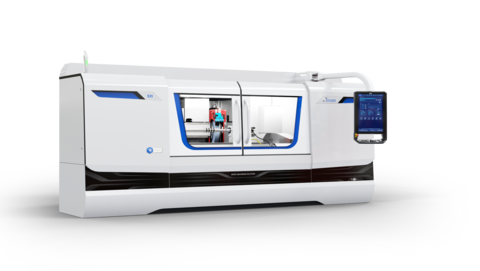
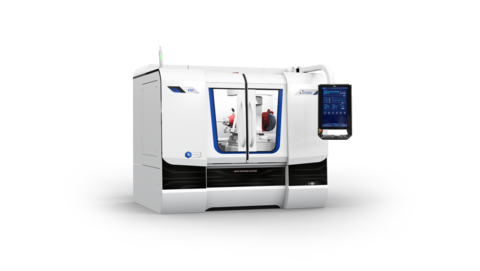
This is made possible by innovative grinding technology, accumulated expertise, and the versatility of STUDER’s cylindrical grinding machines. For example, the S121 and S131 machines for internal cylindrical grinding produce hip joint balls and hip sockets. These are key components of modern hip prostheses that enable patients to move pain-free again after osteoarthritis or severe injuries. Such components, made from biocompatible materials such as titanium or ceramic, often remain in the body for decades. The S121 Radius, with features such as the revolutionary StuderGuide® guideway system and high-precision axis drives with linear motors, is suitable for grinding complex workpieces made of very hard materials. The S131 Radius also offers an extended swiveling range of the B-axis and up to four spindle positions for even greater flexibility.
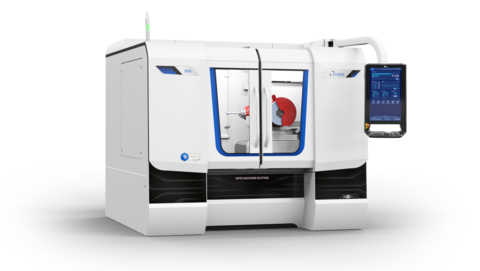
Another application example from the medical field is dental instruments manufactured using the S31 universal cylindrical grinding machine. These geometrically complex tools are indispensable for dental laboratories in the production of dental prostheses or splints. The flexible S31 manufactures carbide dental burs with high precision and efficiency and, thanks to a modular system, can be optimally configured for such tasks. Meanwhile, high-quality grinding technology such as frequency-controlled motorized grinding spindles and a high-resolution direct measuring system ensures the best results. This also allows bone rasps for orthopedics and surgery, among other things, to be reliably produced with the S31. “In fact, many STUDER models are used worldwide for various medical technology components,” confirms Würsch. The grinding machines from the Swiss quality manufacturer are used by both large corporations and small supplier companies.


STUDER Boosts its Customers’ Competitiveness
STUDER maintains a trusting, success-oriented partnership with all its customers. This is because the medical industry is now global in scope and faces intense competition. “The pressure to cut costs and increase efficiency is felt everywhere, while at the same time quality demands are rising,” says Siebner. Demographic change also poses challenges for the industry. On the one hand, this leads to a dwindling supply of skilled workers for manufacturing. On the other hand, demand for medical technology is rising in increasingly aging societies. STUDER has therefore consistently invested in its portfolio with a focus on innovation and high-quality components, enabling customers to succeed in this challenging environment.
Today, STUDER is no longer just a leading manufacturer of grinding machines, but also a technology company. In-house developed software such as StuderWIN, StuderPictogramming, StuderSIM, and integrated tools for profiling, measuring, or generating contours make even the most complex grinding tasks easy to execute. Additionally, STUDER cylindrical grinding machines now feature state-of-the-art sensor technology and C.O.R.E., the revolutionary hardware and software architecture from UNITED GRINDING. Production can be controlled intuitively via its touch panel, much like on a large smartphone, including real-time data analysis. “These digital tools are real game changers, especially for employees with less grinding experience, enabling high-quality and fast production with outstanding results,” emphasizes Würsch.
A Partnership-based Approach Leads to Success
Automation is also becoming increasingly important. This is because it enables the efficient, round-the-clock series production of consistently high-quality workpieces, even with a small staff. For medical technology, the technology also offers another advantage: reduced manual handling significantly lowers the risk of contamination by employees. “Through a modular approach, STUDER can offer its customers fully automated solutions with standardized loaders, robots, and interfaces, but custom setups are also possible,” explains Siebner. Part of STUDER’s service is working with the customers to find tailor-made solutions for their specific requirements. This applies not only to automation options but also to the selection of the appropriate machine configuration, grinding technology, or grinding wheels. Especially in medical technology, where validation, documentation, and process qualification are crucial for success, this partnership-based approach delivers tremendous added value.
STUDER’s globally positioned and competent Customer Care team, with on-site service experts, continues this partnership. Here, fast response times, preventive maintenance programs, and remote diagnostics contribute to maximum machine availability and stable production, which is crucial in a strictly regulated and quality-driven industry. Siebner and Würsch also expect medical technology to continue making further advances in the future, benefiting millions of people around the world. Whether through the increasing capabilities of artificial intelligence or manufacturing innovations from STUDER, such as the recent implementation of the revolutionary, contact-free dressing technology WireDress® for external and internal grinding. One thing is certain, however: STUDER will continue to actively shape this path together with its customers.